
Interesting Facts:
• Before 1979, Iranian women had voting rights, access to judgeships, and protections under the Family Protection Law, which restricted polygamy and improved divorce rights.
• After 1980, these reforms were reversed — the minimum marriage age for girls was reduced, compulsory hijab was enforced, and gender segregation expanded in schools, workplaces, and public spaces.
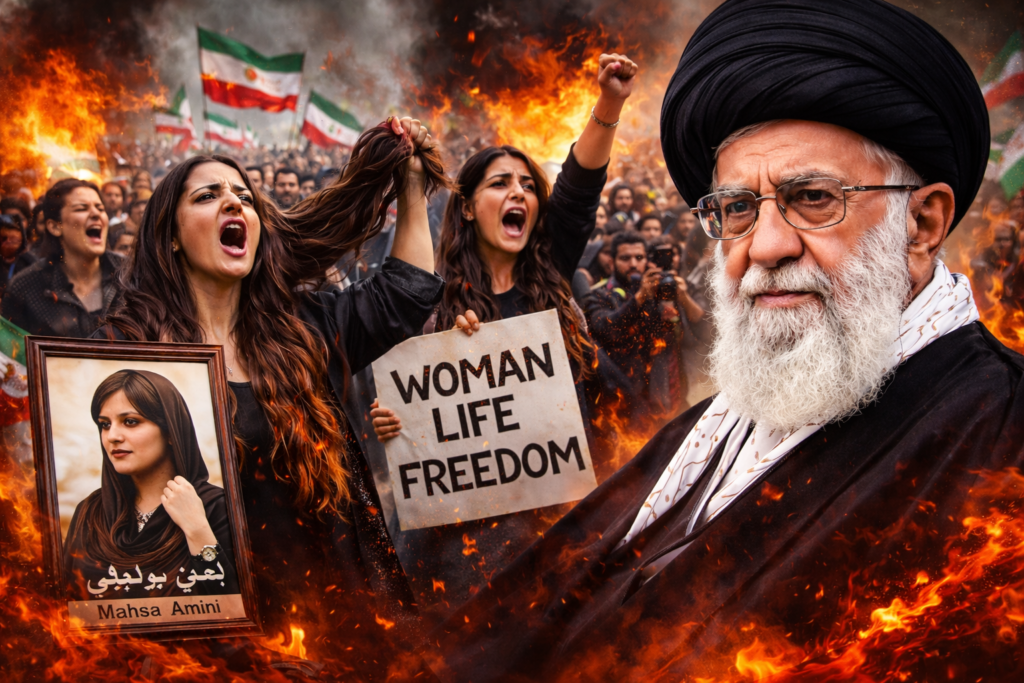
• In 1989, Ali Khamenei became Supreme Leader, strengthening clerical oversight over legislation, media, and civil society.
• Women were banned from becoming judges, and family law shifted authority back toward male guardianship in marriage and child custody.
• Despite restrictions, women’s literacy rose above 85%, and today they form more than half of university students — a striking contradiction within a restrictive system.
• In 2022, 22-year-old Mahsa Amini died after being detained by Iran’s morality police for allegedly violating hijab rules. Her Kurdish name, Jina Amini, became a symbol of resistance.
• Her death sparked the “Women, Life, Freedom” movement — the largest women-led uprising in Iran in decades — reshaping global conversations about gender rights and state control.
