
Afghanistan’s history tells a painful story of progress reversed. During the 1960s and 1970s, Afghan women in urban areas accessed education, worked in public offices, and even held parliamentary seats. However, the rise of the Taliban in the 1990s marked a dramatic rollback of women’s freedoms — banning girls’ education, restricting employment, and enforcing strict dress codes.
After briefly losing power in 2001, the Taliban returned in 2021, and restrictions quickly resurfaced. Girls’ secondary schools were shut, women were barred from universities, NGOs, and most workplaces, and travel without a male guardian was limited.
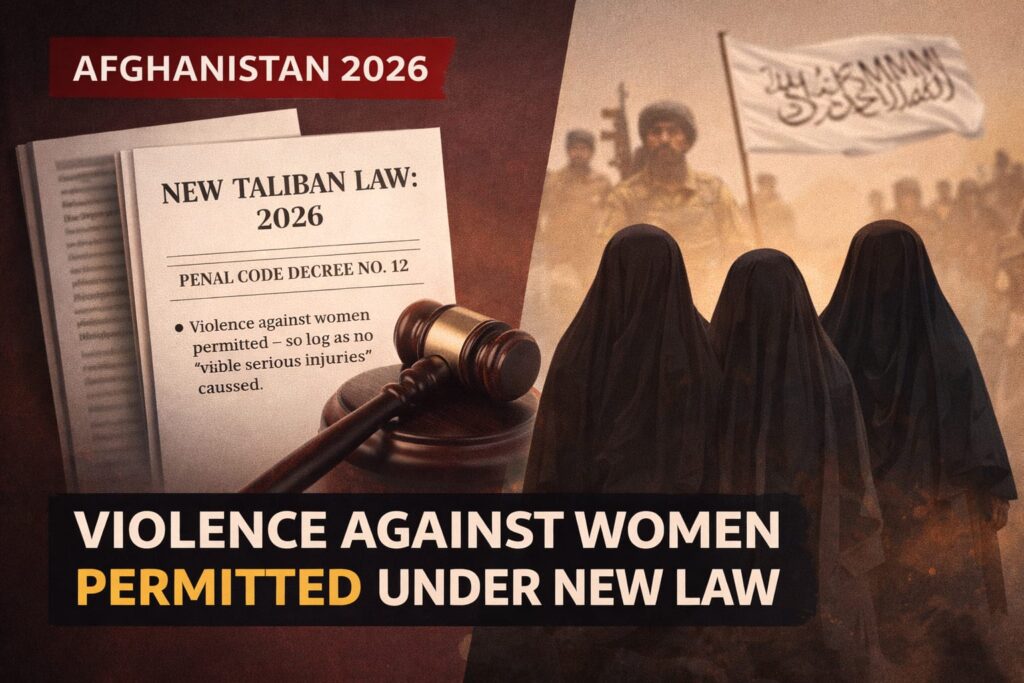
Now, in 2026, the newly introduced penal code has sparked global outrage. Reports indicate that “disciplinary” violence within families may be tolerated if it does not cause “serious injury,” a phrase critics say dangerously minimizes abuse. Human rights groups argue this institutionalizes fear and normalizes control over women’s bodies.
Yet Afghan women continue resisting — through silent protests, underground schools, and global advocacy. Their courage reminds the world that even under the harshest regimes, the demand for dignity and equality refuses to disappear.
